Introduction:
When it comes to renovating or updating your space, removing old flooring is often the first step. Whether you’re preparing to install new tiles, hardwood, or laminate, using a floor scraper can make the process significantly easier. In this guide, we’ll walk you through the steps on how to use a floor scraper effectively, ensuring a smooth and efficient flooring project.
Step 1: Gather Your Tools and Materials
Before you begin, it’s essential to gather the necessary tools and materials:
- Safety Gear:
- Safety glasses
- Gloves
- Knee pads
- Floor Scraper:
- Choose the appropriate floor scraper for your project. There are manual and powered options available. Manual scrapers are ideal for smaller areas, while powered scrapers are more efficient for larger spaces.
- Utility Knife:
- Use a utility knife to cut away any protruding carpet or adhesive.
- Trash Bags and Containers:
- Have a designated area for debris disposal.
Step 2: Prepare the Work Area
- Clear the Space:
- Remove furniture and other obstacles from the area to create a clear working space.
- Ventilate the Area:
- If possible, open windows or doors to ensure proper ventilation, especially when dealing with adhesives or old flooring materials.
Step 3: Start with Surface Preparation
- Remove Baseboards:
- Carefully remove baseboards using a pry bar or putty knife.
- Cut and Remove Carpet:
- Use a utility knife to cut the carpet into manageable sections. Roll and dispose of each section as you go.
- Scrape Away Adhesive:
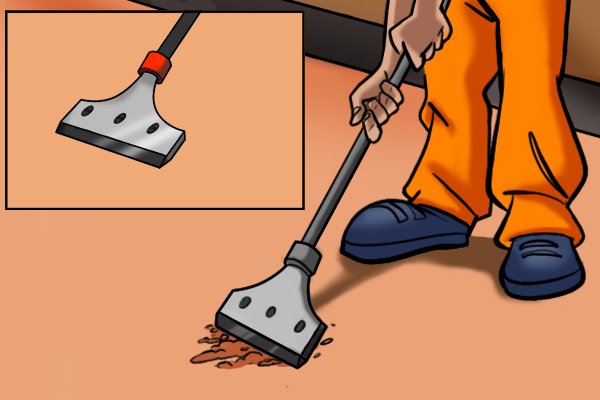
- If there’s adhesive residue on the subfloor, use the floor scraper to remove it. Hold the scraper at a slight angle to ensure effective scraping.
Step 4: Use the Floor Scraper
- Hold the Scraper Correctly:
- For manual scrapers, hold the handle firmly with both hands. For powered scrapers, follow the manufacturer’s instructions for proper handling.
- Start Scraping:
- Position the scraper at a 45-degree angle to the floor. Apply firm, even pressure as you push the scraper forward. Repeat the process, overlapping each pass slightly.
- Work in Sections:
- Divide the floor into manageable sections and focus on one at a time. This approach helps maintain control and ensures a thorough job.
- Adjust Pressure as Needed:
- Adjust the pressure based on the type and thickness of the flooring material. For stubborn areas, you may need to apply more pressure, but be cautious not to damage the subfloor.
Step 5: Clean and Dispose of Debris
- Collect Debris:
- Use a dustpan and broom to collect the scraped debris.
- Dispose of Waste:
- Place the debris in trash bags or containers for proper disposal.
Conclusion:
Mastering the art of floor scraping requires the right tools, preparation, and technique. By following these steps, you’ll be well on your way to achieving a clean and smooth subfloor, ready for your next flooring project. Always prioritize safety, and don’t hesitate to seek professional advice if you encounter challenges along the way. Happy renovating!